A bright smile matters to most people, but years of coffee, tea, red wine, and everyday wear can leave teeth looking duller than you’d like. At-home whitening kits have become a popular, lower-cost alternative to in-office treatments — and Snow is one of the most talked-about brands in that space.
This review covers what’s actually in the kit, how to use it, what it costs, who should avoid it, and what independent research says about at-home peroxide whitening in general.
What Is Snow Teeth Whitening?
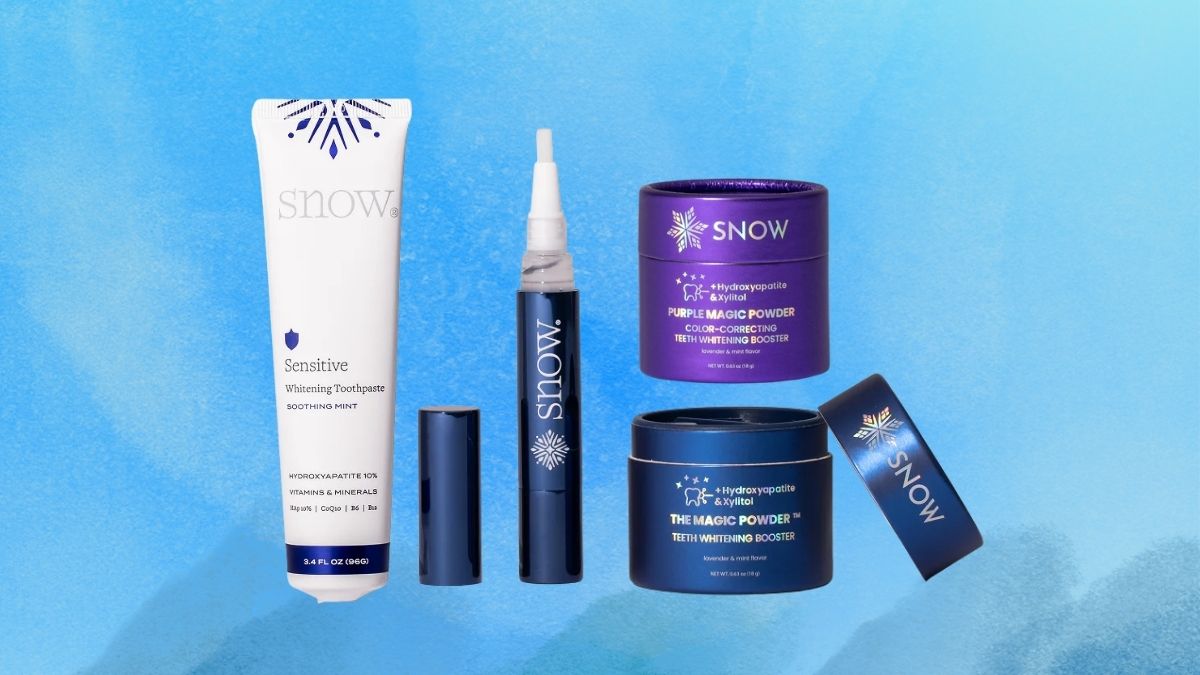
Snow is an at-home teeth whitening system that pairs a peroxide-based serum with a blue LED mouthpiece. It was developed with input from Dr. Brian Harris, a cosmetic dentist based in Phoenix, Arizona, who also sits on Snow’s dental advisory board.
The current flagship product, the DiamondSeries kit, is formulated with hydrogen peroxide and carbamide peroxide (the same active ingredients used in professional whitening) along with hydroxyapatite and potassium nitrate, which are included to help reduce sensitivity. It’s marketed as suitable for most adult teeth, though — as with any peroxide-based product — results and comfort vary by person.
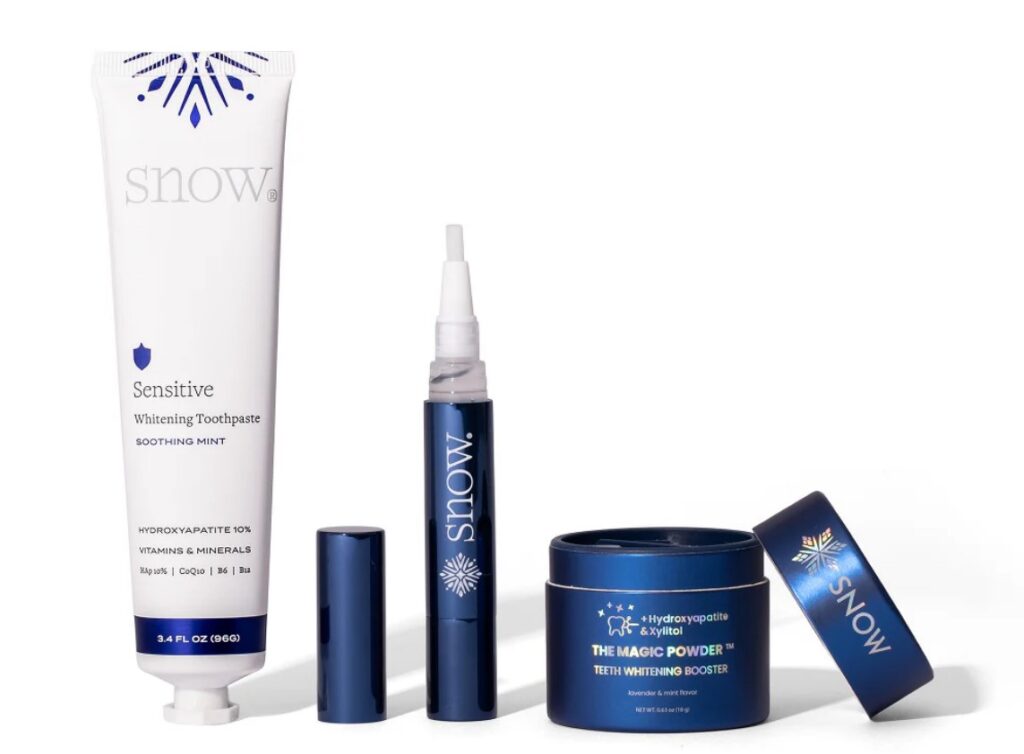
What’s Included in the Kit
- Whitening serum wands — the DiamondSeries kit includes enough serum for 75+ treatments
- An LED mouthpiece that plugs into a phone or USB adapter (no batteries required)
- A tooth-shade guide to track your progress over time
- A 60-day money-back guarantee from the manufacturer
How to Use It
- Brush your teeth thoroughly and rinse.
- Apply the serum to the front surface of each tooth, brushing downward from gumline to tip.
- Plug in the LED mouthpiece, then fit it gently and loosely over your teeth.
- Leave it in for 9 to 30 minutes.
- Remove the mouthpiece, unplug it, and rinse your mouth with water.
Snow recommends daily use for 14–21 days, followed by maintenance sessions two to three times a week or as needed. Don’t exceed the recommended time per session — longer or more frequent use raises the risk of sensitivity without improving results.
Pros and Cons
Pros
- Uses the same class of active ingredients (peroxide) that dentists use for professional whitening
- Includes potassium nitrate and hydroxyapatite, which are commonly used to ease sensitivity
- No batteries needed — the mouthpiece runs off a phone or wall adapter
- 60-day money-back guarantee direct from the manufacturer
- Lower cost than most in-office whitening treatments
Cons
- Peroxide-based whitening can still cause temporary tooth sensitivity or gum irritation in some users, even with sensitivity-focused ingredients
- Results are temporary and fade without touch-ups, especially if you regularly drink coffee, tea, or wine, or smoke
- Won’t whiten crowns, veneers, fillings, or other dental restorations
- Not recommended for anyone with untreated cavities, exposed roots, or recent dental work
Does It Work?
Independent research on at-home peroxide whitening generally supports the idea that it can lighten teeth by one to two shades over a few weeks of consistent use, though results vary by starting shade and the type of staining involved. It works best on surface stains from food, drink, and tobacco, and is far less effective on stains that originate inside the tooth (intrinsic stains), which typically require a dentist’s help.
Who Should Be Cautious or Avoid It
- Pregnant or breastfeeding women: There isn’t enough research on hydrogen peroxide exposure during pregnancy or breastfeeding to call it definitively safe. Talk to your doctor or dentist before using any peroxide-based whitening product in this situation — don’t rely on a blanket safety claim from a manufacturer.
- Anyone under 18: Snow is intended for adults; younger teeth respond differently to whitening chemicals and should only be whitened under a dentist’s supervision.
- People with untreated cavities, exposed tooth roots, gum disease, or recent dental work: Peroxide can reach the nerve through compromised enamel and cause pain, or fail to blend with existing restorations.
- Anyone with a known sensitivity to peroxide or a history of severe tooth sensitivity.
If you’re unsure whether whitening is safe for you, check with a dentist before starting — this review isn’t a substitute for professional dental advice.
Pricing
Snow’s product lineup and pricing change periodically, and kits are sold in several tiers — from lower-cost dissolving strips to the full Diamond Series LED kit. As of 2026, full kits have generally run somewhere in the $60–$150 range depending on promotions and which version you buy, with lower-cost strip and serum refill options available separately. Because pricing shifts, check the manufacturer’s site directly for current figures before buying, and be cautious of third-party sellers offering steep discounts, since counterfeit or expired kits do circulate online.
Snow vs. Other At-Home Whitening Options
| Feature | Snow (LED kit) | Whitening strips | Custom dentist trays |
|---|---|---|---|
| Active ingredient | Hydrogen/carbamide peroxide | Hydrogen peroxide | Carbamide peroxide (higher concentration) |
| Typical cost | $60–$150 | $20–$60 | $150–$400+ |
| Treatment time | 9–30 min/day | 30–60 min/day | Overnight or per dentist instructions |
| Sensitivity risk | Moderate (reduced with potassium nitrate) | Moderate to high | Lower, monitored by a dentist |
| Best for | Surface stains, moderate whitening goals | Light touch-ups, budget option | Deeper whitening, sensitive teeth needing supervision |
FAQs
Q: How long should I use the kit each day?
Ans: Sessions run 9 to 30 minutes, once daily for 14–21 days, then as-needed maintenance. Don’t go beyond 30 minutes per session — it increases sensitivity risk without adding benefit.
Q: Is it safe for tooth enamel?
Ans: Used as directed, peroxide-based whitening is generally considered safe for enamel. Overuse — longer sessions, more frequent applications, or skipping the recommended breaks — is the main cause of enamel and gum irritation with any peroxide whitening product, not just Snow’s.
Q: Can I eat right after whitening?
Ans: Wait about an hour, and stick to light-colored foods afterward since your teeth are more porous and stain-prone right after treatment. Many users prefer whitening at night, right before bed.
Q: Can I use it while pregnant or breastfeeding?
Ans: Talk to your doctor or dentist first. There isn’t enough safety data on peroxide whitening during pregnancy or breastfeeding to make a blanket recommendation either way.
Q: Do dentists recommend Snow specifically?
Ans: The product was developed with a licensed cosmetic dentist, and peroxide-based whitening in general is a method dentists use and endorse. That said, no major independent dental association has issued a formal endorsement of the Snow brand specifically, so treat manufacturer claims about “dentist-recommended” status with some skepticism and ask your own dentist if you have concerns.
Bottom Line
Snow’s kit uses legitimate, dentist-recognized whitening ingredients and includes features aimed at reducing sensitivity, which sets it apart from some cheaper drugstore options. It’s a reasonable middle-ground choice if you want noticeably whiter teeth without an in-office appointment. It isn’t a miracle fix, though — results are temporary, it won’t work on restorations, and some users will still experience sensitivity. If you have any underlying dental issues, or you’re pregnant or breastfeeding, check with a dentist before you start.